

Robinhood Chain went live on mainnet in July 2026, bringing Stock Tokens, lending, spot trading, and perpetuals onto an open, EVM-compatible network. Before users can access those markets, however, they need to move capital onto the chain. That becomes less straightforward when funds are spread across several chains and held in different stablecoins and tokens.
With FastBridge, users can land on Robinhood Chain in seconds, ready to trade. Instead of bridging each balance separately, you can combine assets from multiple chains, swap them, and receive the token you need on Robinhood Chain in one go.
This guide explains the main ways to bridge to Robinhood Chain, where standard routes can become limiting, and how to move funds to Robinhood Chain step by step with FastBridge.
Why users move funds to Robinhood Chain
Robinhood Chain is built to bring traditional markets, crypto and real-world assets onto one network, with low execution fees paid in ETH. It runs independently of Robinhood's brokerage accounts and works with any EVM-compatible wallet, so users need to bridge funds onto the chain before they can use its apps. Some common use cases include:
- Trade on Uniswap and other DEXs: Uniswap is the primary AMM on Robinhood Chain, alongside venues such as Rialto and 1inch. Users can swap tokens and provide liquidity to supported pools, subject to pool conditions and impermanent-loss risk.
- Lend and earn: Robinhood Earn uses Morpho to offer decentralized lending with USDG, the Paxos-issued stablecoin. Users can supply assets to earn variable yield, while monitoring the risks of the underlying markets.
- Trade perpetual futures: Lighter and Arcus bring perpetual futures trading to Robinhood Chain.
- Access tokenized stocks and ETFs: Stock Tokens let eligible users hold and transfer tokenized equities onchain.
Where the canonical Robinhood Chain bridge becomes limiting
Robinhood Chain's canonical bridge is the native Arbitrum bridge between Ethereum and Robinhood Chain. It is trustless and inherits its security from Ethereum, which makes it the reference route for moving ETH and supported ERC-20 tokens.
Token support, fees, gas requirements and the asset received depend on the route you choose. While each route works differently, users commonly face the following limitations:
- Ethereum-only deposits on the canonical bridge: The canonical bridge only moves funds from Ethereum mainnet. If your funds sit on Base, Arbitrum or another network, you first need to get them to Ethereum or use a different provider.
- Slow exits: Deposits take around 10 minutes, but withdrawals back to Ethereum take about 7 days because of Arbitrum's challenge period, followed by a separate claim transaction on Ethereum.
- One source chain per transfer: Unlike FastBridge, most cross-chain bridges accept funds from only one source chain at a time. If your assets are spread across Ethereum, Base and Arbitrum, you must bridge three times, repeating the approvals, waiting and paying gas for each transfer.
- Native gas requirements: Many routes require the source chain's native token before the transfer can begin. After arriving, users also need ETH to pay for transactions on Robinhood Chain.
- Different token addresses: Bridged ERC-20 tokens can have different contract addresses on Robinhood Chain than on Ethereum. Users need to check they are receiving the asset the destination app actually supports.
- Costs are not always shown together: Bridge fees, source gas, price impact and destination output may appear separately, making it harder to compare the true cost of each route. Our guide to bridging without hidden costs breaks down what to check.
What FastBridge does differently
FastBridge is a unified, intent-based cross-chain bridge built by Avail. You choose the assets you want to swap and/or bridge and the result you want on Robinhood Chain; FastBridge coordinates the required swaps, routing and settlement.
- Combine multiple chains and tokens
Multi-source input is FastBridge's core capability. You can bring together supported balances from different chains in one flow. For example, you can combine USDC on Base, USDT on Arbitrum and ETH on Ethereum into one flow on Robinhood Chain. What would normally require several bridge transactions is handled as one coordinated FastBridge transaction.
- Avoid native gas top-ups
On supported routes, source-chain gas fees can be covered in USDC or USDT. This means you do not need to hold a separate native gas token on every source chain. This is particularly useful when small balances are spread across several chains and you do not hold each network's native token.
- Choose how much to send or receive
With Exact In, you choose how much to send. With Exact Out, you choose the exact amount you want to receive on Robinhood Chain, and FastBridge calculates what is needed. Exact Out is useful when you need a precise ETH balance for gas, or a set amount for a deposit or a position.
- See the full quote before confirming
FastBridge shows your source assets, destination amount, fees and price impact before you approve the transaction. You can adjust the selected balances and review the updated quote.
- Settle through a non-custodial intent model
FastBridge is powered by Avail Nexus. Source funds are temporarily locked in onchain Vault contracts that act as conditional escrow. A solver fronts the destination liquidity and receives the source funds only after the requested outcome has been fulfilled and verified. FastBridge does not take custody of the user's funds through a company-controlled account. See the FastBridge FAQs for more on how settlement works.
How to bridge to Robinhood Chain with FastBridge
The example below shows how to combine your USDC balances from Base and Arbitrum and receive ETH on Robinhood Chain, so you arrive with the gas token you need to start transacting.
Step 1: Open FastBridge and connect your wallet
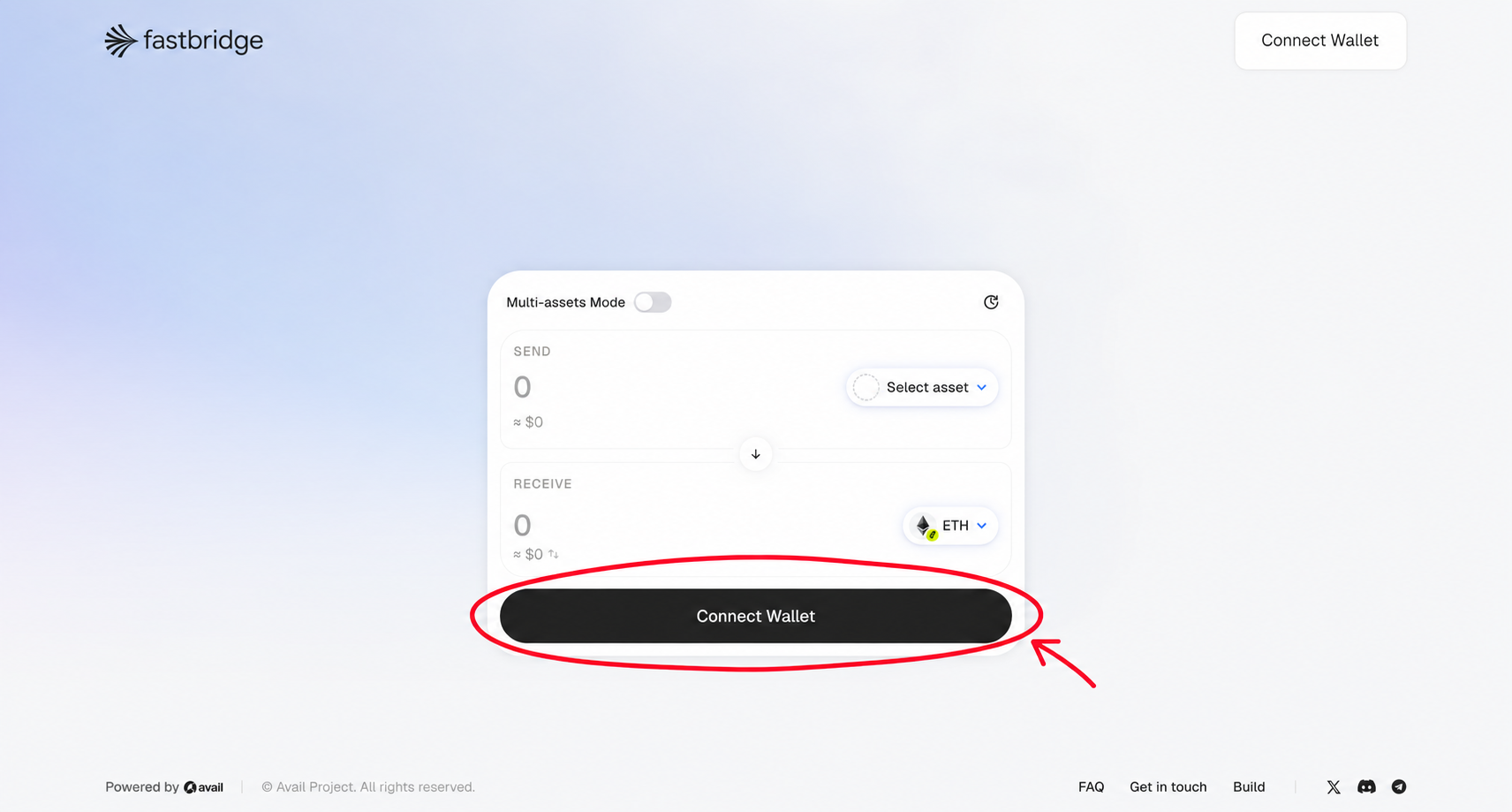
Go to fastbridge.availproject.org/app and connect an EVM-compatible wallet. FastBridge supports wallets including MetaMask, Rabby, Coinbase Wallet and WalletConnect-compatible wallets. Robinhood Chain uses chain ID 4663, and most wallets will prompt you to add the network when needed.
Step 2: Select the source chain(s), asset(s) and amount you want to move
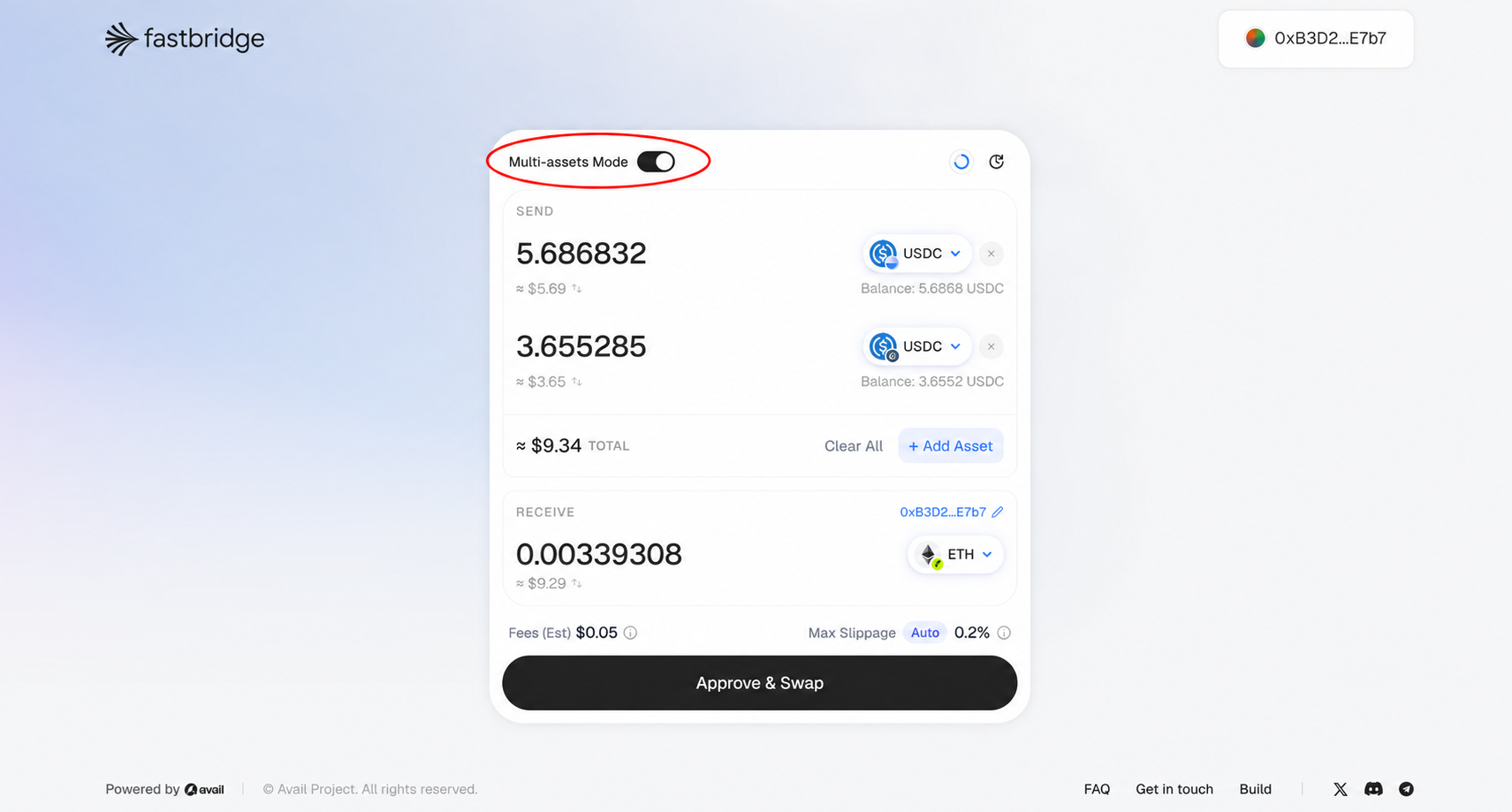
Under Send, choose the token and chain you want to use and enter the amount. To combine balances from more than one chain or token, turn on the Multi-assets Mode and add each supported source separately. In this example we have used USDC on Base and USDC on Arbitrum as our source assets.
Step 3: Choose Robinhood Chain as your destination
Under Receive, select Robinhood Chain as the destination and choose an available token. Check the estimated amount, fees and price impact shown in the interface. If you are receiving a token other than ETH, make sure you will also have enough ETH on Robinhood Chain for destination gas.
Step 4: Approve the swaps in your wallet
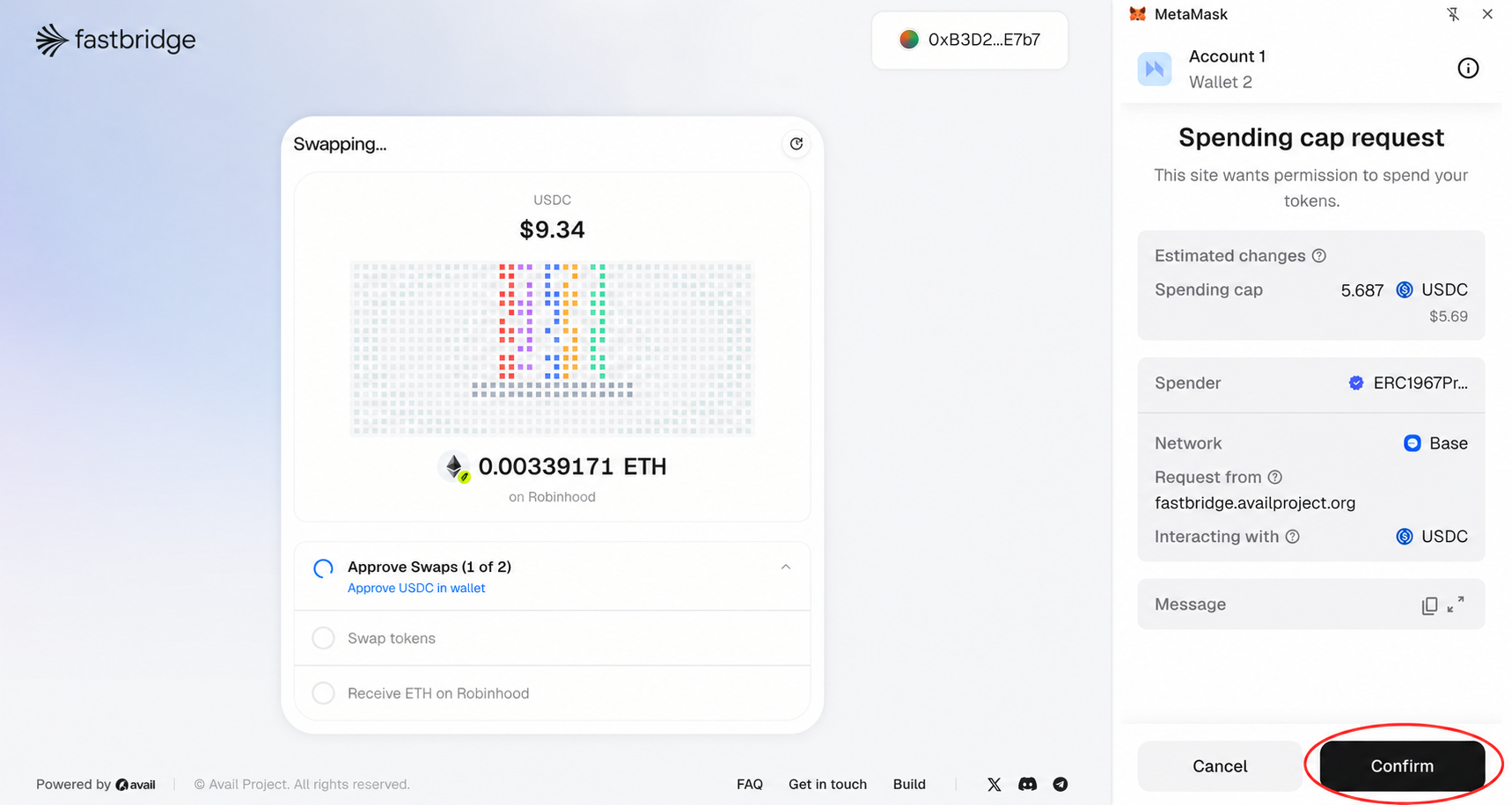
Click Approve & Swap, then approve each source asset when prompted in your wallet. Track the progress as FastBridge swaps and moves your assets to Robinhood Chain.
Step 5: Confirm the funds arrived on Robinhood Chain
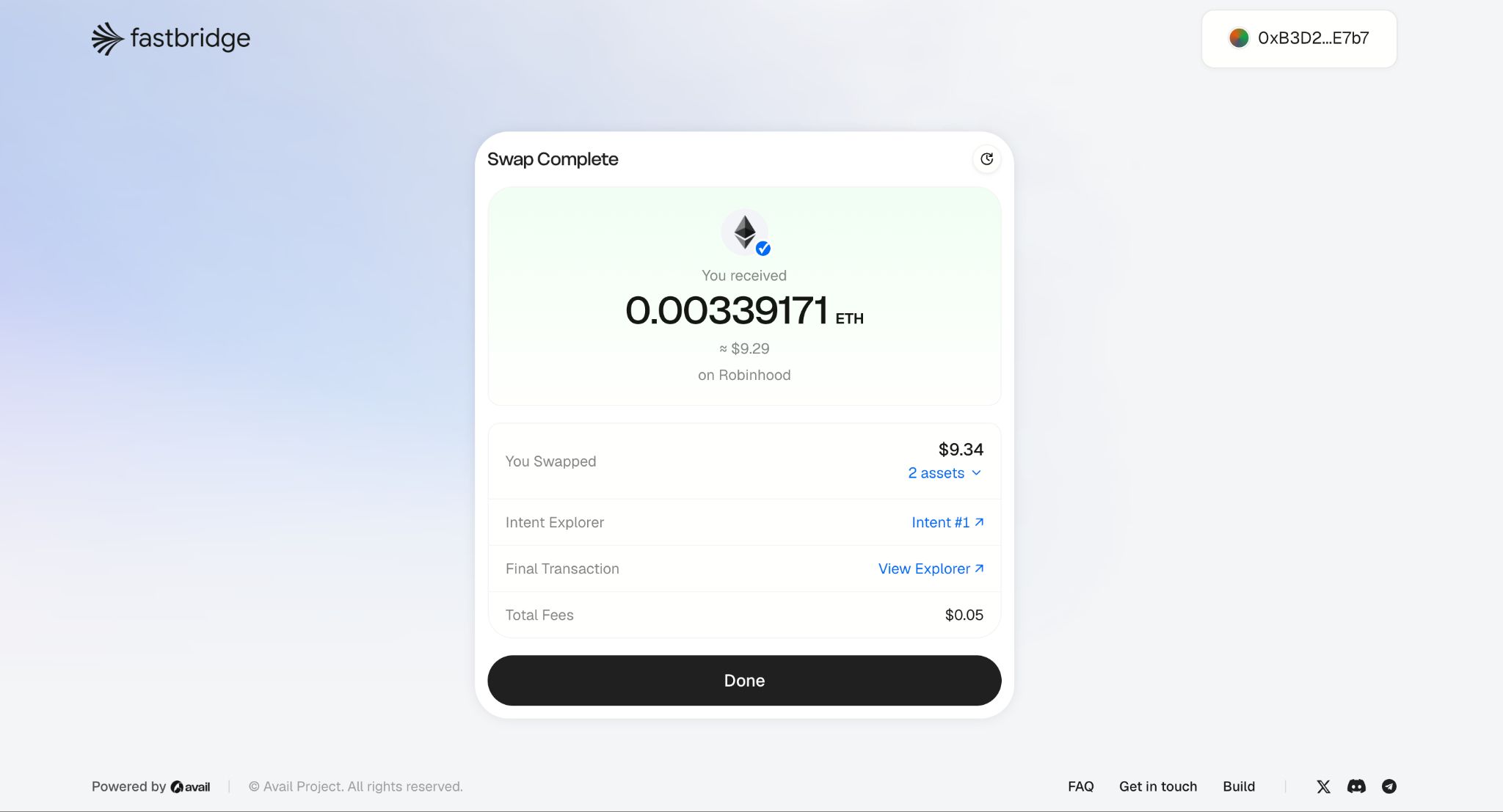
When the transfer is complete, FastBridge displays the exact amount you have received, the assets used and the total fees. You can also open the available explorer links, or check your address on the Robinhood Chain Blockscout explorer, to verify the completed transaction.
Move to Robinhood Chain in one flow
Robinhood Chain gives users access to onchain trading, lending, perpetuals and tokenized-asset markets on an Ethereum-compatible network. Getting there should not require a separate bridge process for every chain and token in your portfolio.
FastBridge lets you combine multiple balances from multiple chains, swap them and receive one unified balance on Robinhood Chain. Supported stablecoin-to-stablecoin transfers settle with zero slippage. The same flow works for other destinations too, including Base and BNB Chain.