

TL;DR
The best cross-chain bridge in 2026 depends on what you're moving and where from. Here's the short version:
- FastBridge by Avail, best for consolidating assets from multiple chains in one transaction. The only bridge with native multi-source support. Offers cross-chain swaps and gas abstraction. Supports all major EVM chains.
- Across, best for fast single-asset transfers with deep liquidity on major EVM routes (ETH, USDC between Ethereum, Arbitrum, Optimism, Base).
- Stargate, best for the widest chain coverage including non-EVM networks. Supports 80+ blockchains.
- deBridge, best for intent-based transfers with native Solana and Tron support.
All four are non-custodial and deliver native assets. They differ substantially in architecture, speed, asset coverage, and whether they support pulling from multiple source chains at once.
Why multi-source bridging matters
Most active DeFi users don't hold capital on one chain. A typical portfolio might have USDC on Ethereum from an exited position, USDT on Arbitrum from a yield farm, ETH on Base from a launch, and stablecoins parked on Optimism. When a new opportunity appears on Monad, MegaETH, Citrea, or any other chain, the conventional bridging workflow asks the user to do the same thing three or four times: switch networks, bridge, pay gas, wait, repeat.
Every bridge in this guide except FastBridge operates on a single-source, single-destination model. One chain in, one chain out. If your funds are split across three chains, you're making three transactions.
FastBridge is the only bridge built around multi-source input: you add the tokens and chains you want to bridge from, then select the destination chain and the token you want to receive. FastBridge pulls from all selected source chains in one signed transaction. You can also swap at the destination, send USDC and receive HYPE on HyperEVM, for example, making it the only bridge that consolidates and swaps in a single flow.
The other two features that meaningfully change the user experience: no token wrapping (you send and receive native assets throughout) and gas abstraction (fees are paid in stablecoins, so you don't need to hold native gas tokens on every source chain).
Our top picks
Four bridges that meaningfully cover the market. Each is non-custodial and delivers native assets. They differ on architecture, speed, coverage, and whether they support pulling from multiple source chains at once.
FastBridge
Best for: consolidating assets from multiple chains; cross-chain swaps; onboarding to new EVM L2s without managing gas.
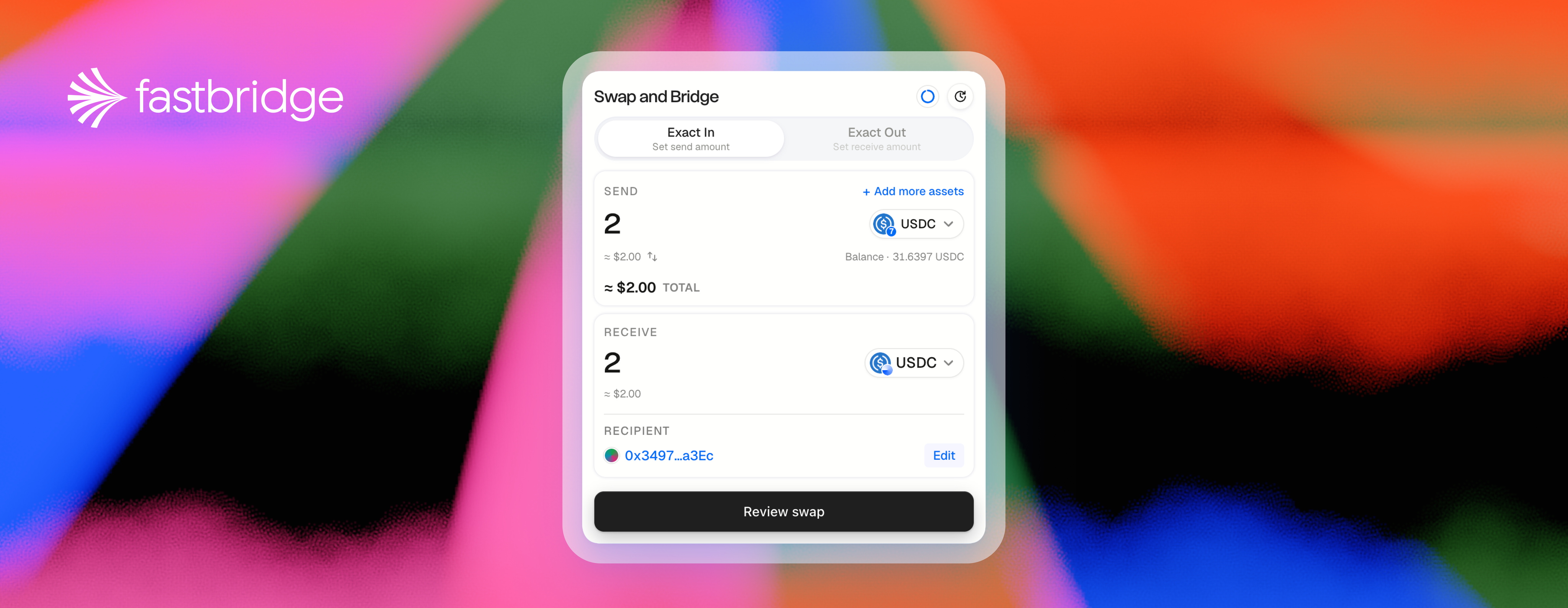
FastBridge is a unified cross-chain bridge built by Avail and powered by Avail Nexus, an intent-based coordination layer. It is the only bridge in this guide that natively supports multi-source transactions: add the source tokens and chains you want to bridge from, select the destination chain and the token you want to receive, and FastBridge handles the rest in one signed transaction.
FastBridge also supports cross-chain swaps, you can send any token(s) and receive a different token at the destination. Swaps between different tokens might show a small price impact before you confirm. Transactions settle in approximately 10–20 seconds. No native gas tokens required on any source chain, fees can be paid in USDC or USDT.
FastBridge supports all major EVM chains, including Ethereum, Arbitrum, Optimism, Base, Polygon, Avalanche, BNB Chain, HyperEVM, Monad, MegaETH, and Citrea.
Across Protocol
Best for: fast single-asset transfers between major EVM chains; deep liquidity on ETH and USDC routes.
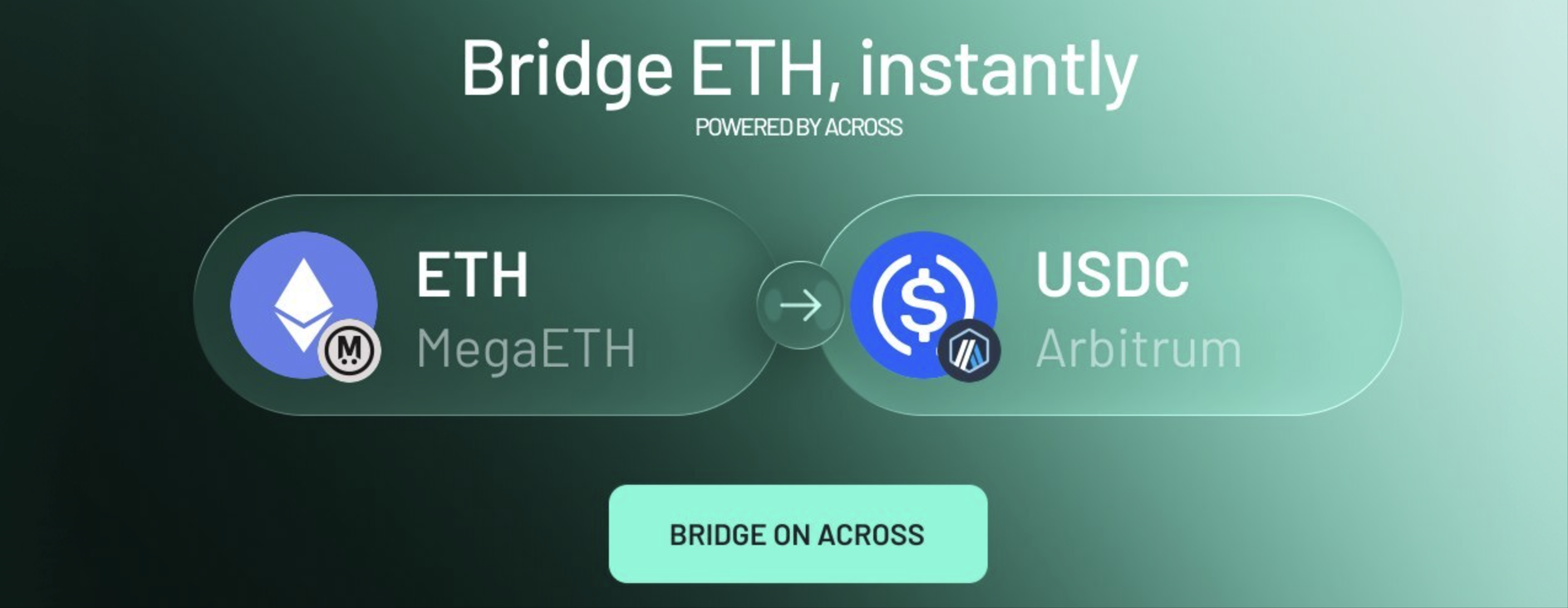
Across is a mature intent-based bridge that uses a competitive relayer network to fulfil user intents. It is particularly strong for ETH, WBTC, USDC, and USDT transfers between Ethereum, Arbitrum, Optimism, Base, and BSC, and has expanded to include Solana and Hyperliquid. Non-custodial, native asset delivery, no wrapped tokens.
Each transfer is chain-to-chain: Across does not support consolidating from multiple source chains in a single transaction.
across.toStargate
Best for: broad chain coverage including non-EVM networks; large native asset transfers.
Stargate is a composable omnichain asset bridge built on LayerZero. The current version supports 80+ blockchains, including EVM networks, Solana, and other non-EVM chains. It delivers native assets (USDC, USDT, ETH, BTC, OFTs) with instant guaranteed finality, typically in seconds. Non-custodial.
The UX offers multiple routing options based on speed and fees, which gives flexibility but can introduce friction. Stargate does not offer multi-source input, each transfer is a single source-to-destination route.
stargate.financedeBridge
Best for: intent-based transfers with native Solana and Tron support; solver-driven pricing.
deBridge operates the DLN (deBridge Liquidity Network), a 0-TVL intent-based execution layer where competing solvers fulfil orders using their own liquidity. It supports 25+ chains including Ethereum, Solana, Tron, BNB Chain, Arbitrum, Optimism, Polygon, Avalanche, and Base. Transfers typically settle in 1–4 seconds with native asset delivery. Fees are transparent: a flat component plus 4 bps on the input. Non-custodial.
Like Across and Stargate, deBridge handles one source and one destination per transaction.
debridge.financeSide-by-side comparison
The differences between these four bridges are most visible side by side. Multi-source input, cross-chain swaps, and gas abstraction are the capabilities that meaningfully separate FastBridge from the rest.
| FastBridge | Across | Stargate | deBridge | |
|---|---|---|---|---|
| Architecture | Intent / solver | Intent / solver | Unified liquidity pools (LayerZero) | Intent / solver (0-TVL) |
| Settlement speed | ~10–20 seconds | Seconds | Seconds | 1–4 seconds |
| Multi-source input | ✓ Native | — | — | — |
| Native asset delivery | ✓ | ✓ | ✓ | ✓ |
| Gas abstraction | ✓ Pay in USDC/USDT | — | — | — |
| Self-custodial | ✓ | ✓ | ✓ | ✓ |
| Chain coverage | All major EVM chains (incl. Monad, MegaETH, Citrea, HyperEVM) | Major EVM + Solana + Hyperliquid | 80+ (EVM + non-EVM incl. Solana) | 25+ (EVM + Solana + Tron) |
Cross-chain bridge fee comparison
Bridge fees typically combine a protocol fee and a solver fee (in intent-based models). Real fees vary by route, direction, asset, and time of day. FastBridge shows the exact fee, execution gas fee, protocol fee, solver fee, and any price impact, in the Confirm Swap screen before you sign.
| Bridge | Protocol fee | Solver fee | Model |
|---|---|---|---|
| Stargate | ~0.06% | — | Liquidity pools |
| Across | ~0.05–0.1% | ~0.05–0.2% | Intents (relayers) |
| deBridge | ~0.04–0.1% + flat fee | ~0.1–0.3% | RFQ / market-maker |
| FastBridge | ~0.05% | ~0.02–0.05% | Intents (multi-source, swaps) |
How to choose the right bridge
Pick based on the shape of your move:
Multiple assets across chains, or onboarding to a new EVM L2.
FastBridge — the only native multi-source option, with support for new EVM chains.
Single asset between major EVM chains, deepest liquidity.
Across — especially ETH and USDC on Ethereum, Arbitrum, Optimism, and Base.
Non-EVM routes (Solana, Tron, and beyond).
Stargate for the widest footprint; deBridge for Solana, Tron, or EVM.
Large stablecoin volume on a cost-sensitive route.
Compare quotes. FastBridge can process up to $10M in a single transfer.
How intent-based bridges work (and why they're faster)
Legacy bridges use a lock-and-mint or burn-and-mint flow: tokens are locked or burned on the source chain, a wrapped version is minted on the destination, and the user swaps or unwraps to get the native asset. This introduces intermediate tokens, multi-step confirmations, and settlement delays.
Intent-based bridges flip the model. The user declares an outcome, "I want X USDC on chain Y", and a solver fulfills the intent using their own liquidity on the destination chain, delivering native tokens in seconds. The solver is reimbursed on-chain after verification. FastBridge, Across, and deBridge all use this architecture.
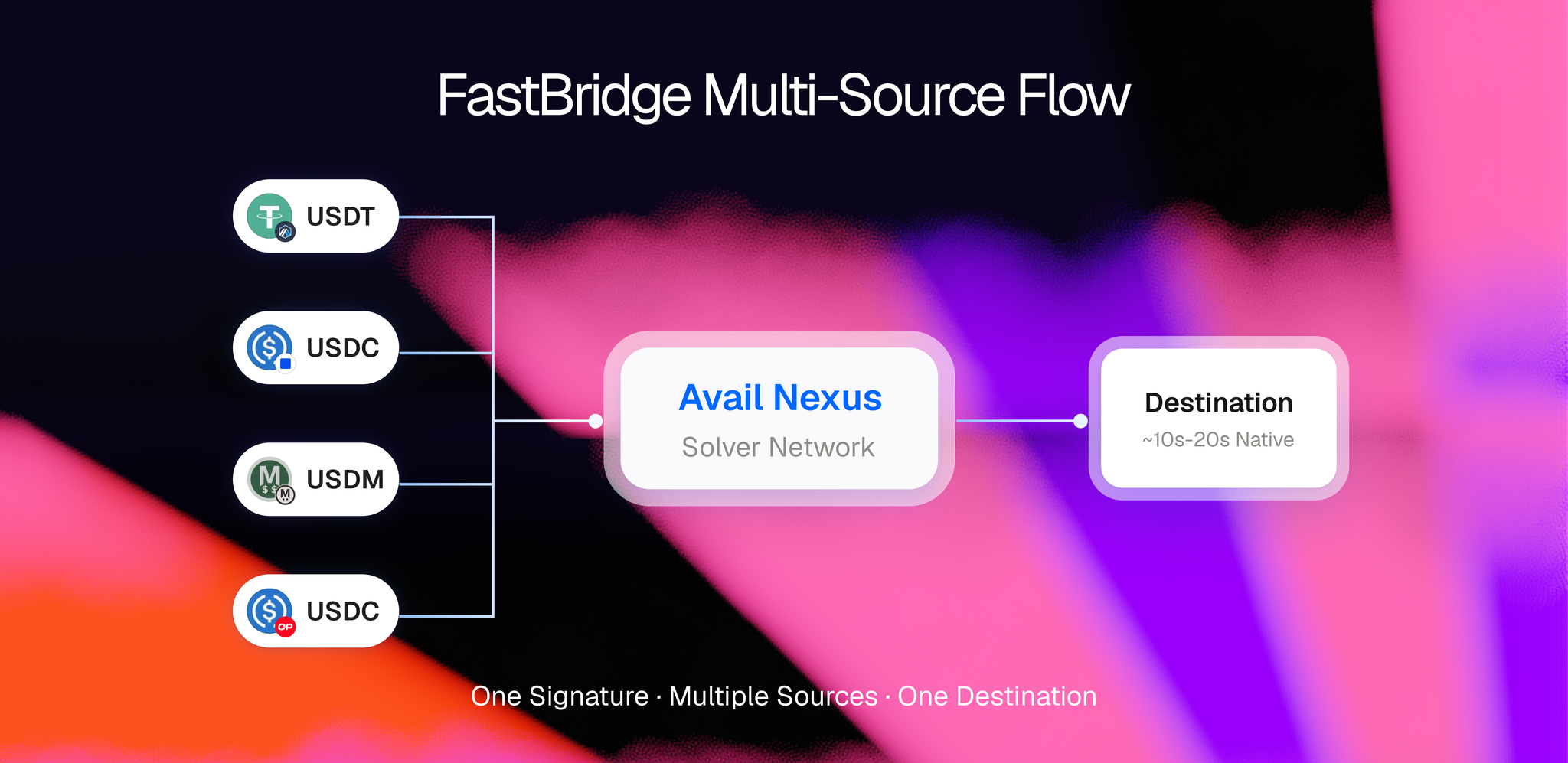
FastBridge extends the intent model further. Most intent bridges still resolve to one source chain per intent. FastBridge resolves a single intent across multiple source chains simultaneously, and can swap into a different destination token in the same flow.